Dual Polarized Vivaldi antenna
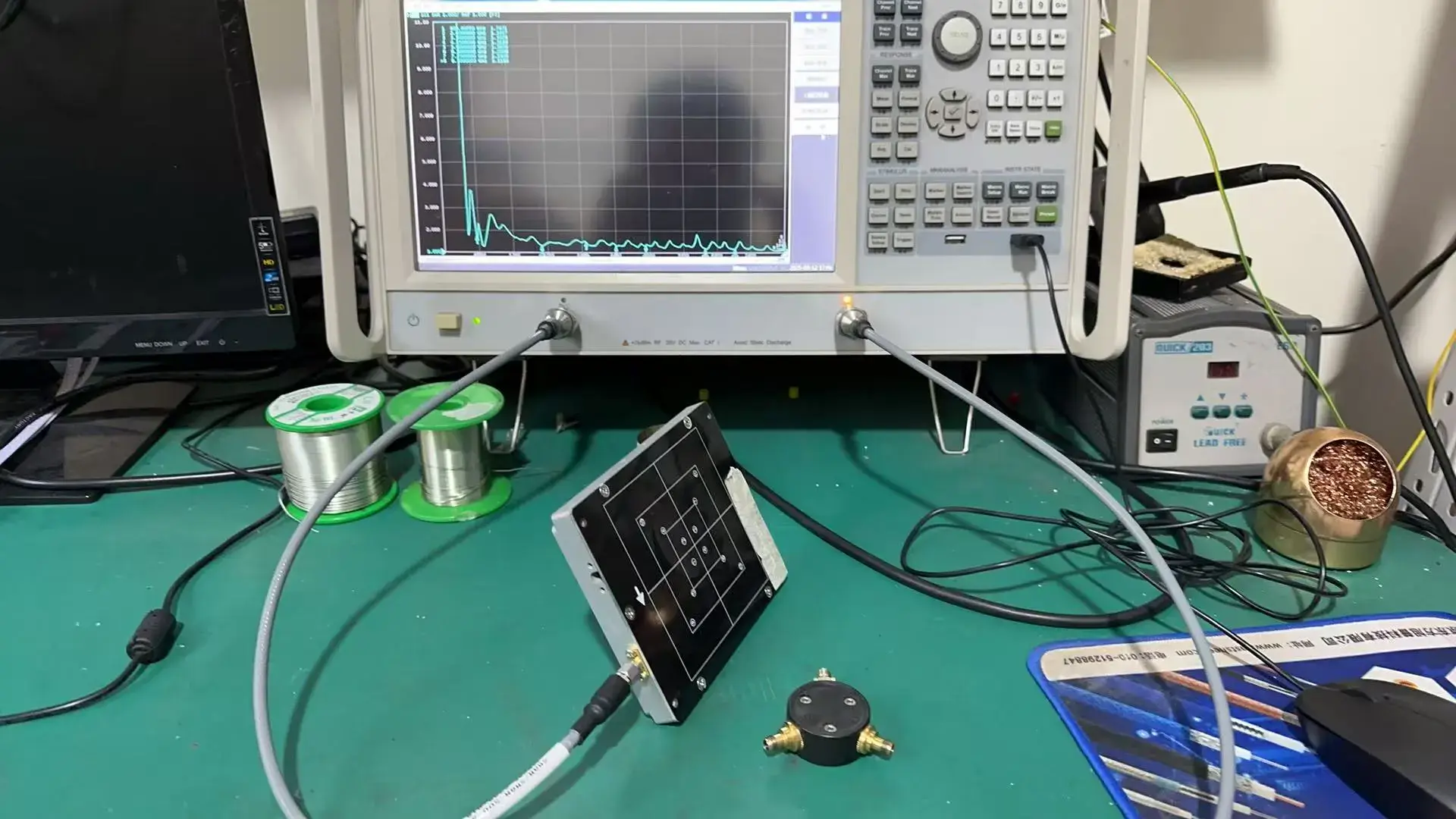
DPVA Antenna Key Features
Antenna Type: DPVA(Dual Polarized Vivaldi Antenna)
Frequency Range:900MHz ~ 9000 MHz
RF Connector: SMA(F)
Dimension:(L) 95 x (W)86 x (H) 1 mm(for Each)
Terminal: 50 ohm
VSWR: < 3.2 @ 700 MHz ~ 6000 MHz(Type 1.8)
Antenna Type: DPVA(Dual Polarized Vivaldi Antenna)
Frequency Range:900MHz ~ 9000 MHz
RF Connector: SMA(F)
Dimension:(L) 95 x (W)86 x (H) 1 mm(for Each)
Terminal: 50 ohm
VSWR: < 3.2 @ 700 MHz ~ 6000 MHz(Type 1.8)
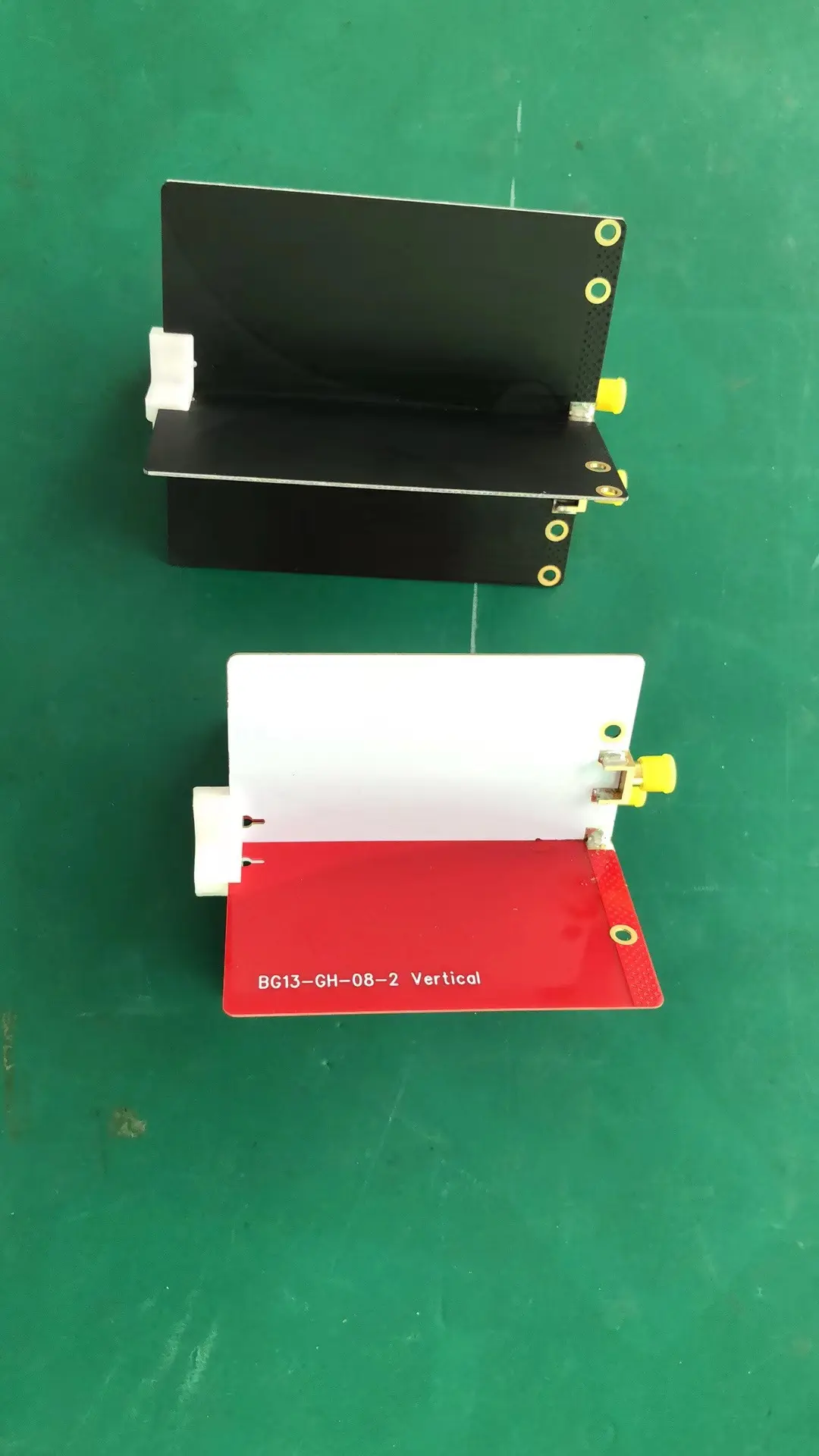
DPVA Antenna is ideal for inclusion into your testing accessories for testing mmWave, FR1. The Antenna is a Dual Polarized antenna in the horizontal and vertical allowing you to test your device in
either polarizations without having to rotate your antenna which can save you time. Also, the Dual Polarized Vivaldi antenna gains the advantages from the Vivaldi antenna design making it useful in
many applications due to it’s high gain, ultra-wideband(UWB) and broadband(BB) capabilities. The Vivaldi design also allows for a more compact size and most ridge horn antennas so can fit into
smaller spaces, such as a RF Shielded Enclosure. The Vivaldi antenna design incorporated the antenna contributes to its very directional capability which is ideal for use within a small confined space.
Dual Polarized Vivaldi Antenna Applications
The Dual Polarized Vivaldi antenna, with its distinctive tapered slot structure, has emerged as a pivotal component in modern wireless systems due to its wide bandwidth, high
gain, and stable radiation patterns. In the realm of communication, it excels in 5G and beyond networks, enabling efficient transmission and reception of high-speed data. Its
dual polarization feature minimizes interference and enhances channel capacity, making it ideal for dense urban cellular deployments and satellite communications where
signal integrity and robustness are critical.
In radar systems, the Vivaldi antenna’s broad operational bandwidth allows for precise target detection and imaging across various frequencies. Its ability to rapidly switch
between polarizations provides additional information about targets, improving classification accuracy. This makes it valuable in military surveillance, air traffic control, and
weather monitoring radar setups.
For remote sensing applications, such as ground-penetrating radar (GPR) and synthetic aperture radar (SAR), the antenna’s wideband characteristics enable detailed
subsurface or surface imaging. The dual polarization feature captures diverse scattering mechanisms, offering richer data for geological surveys, environmental monitoring,
and archaeological explorations. Additionally, in electromagnetic compatibility (EMC) testing, the Vivaldi antenna’s consistent radiation performance across a wide frequency
range ensures reliable assessment of device emissions and immunity, safeguarding the functionality of electronic systems.