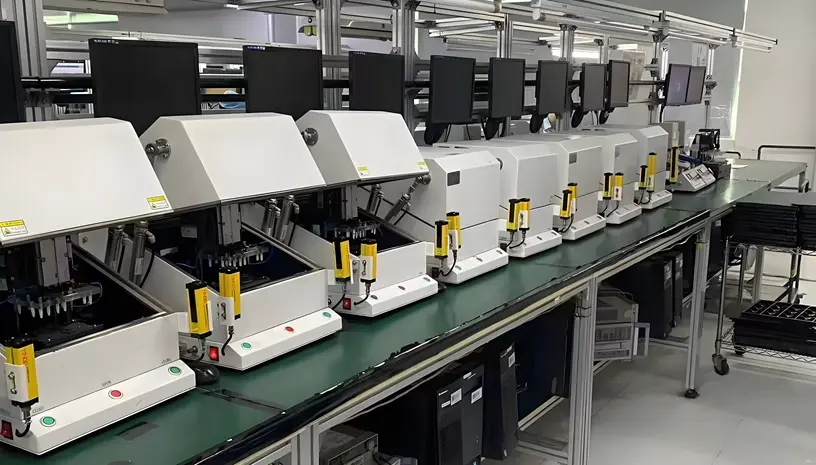
What are the different types of shield box designs available?
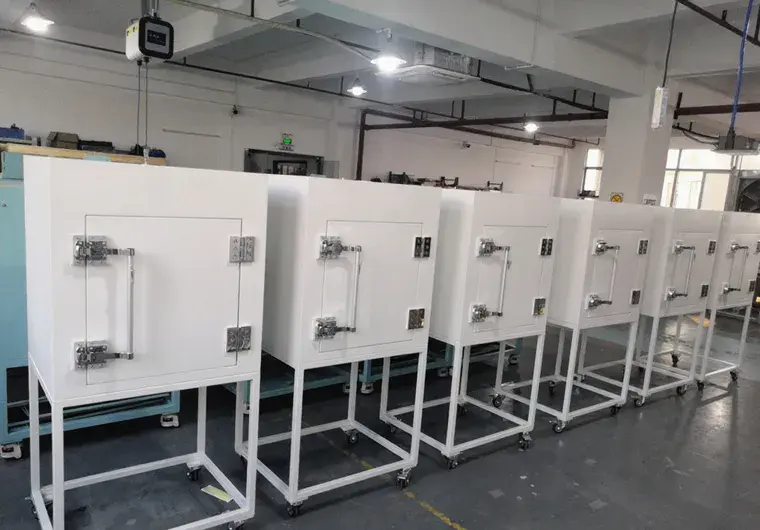
Shield boxes come in a variety of structural, functional, and application-specific designs to meet different testing scenarios, from small component testing to large-scale wireless device verification. Below are the most common and practical types of shield box designs you can choose from.
1. Manual Shield Boxes
These are the most widely used standard shield boxes, operated by hand opening and closing.
Features: Simple structure, cost-effective, easy to maintain.
Applications: Small devices like Wi-Fi modules, Bluetooth chips, mobile phone components, and general R&D testing.
2. Pneumatic Shield Boxes
Driven by air pressure to automatically open and close the lid or door.
Features: High sealing consistency, labor-saving, suitable for high-frequency testing.
Applications: Production line testing, semi-automatic test stations, medium-sized wireless products.
3. Motorized / Automatic Shield Boxes
Controlled by motors for fully automatic opening, closing, and locking.
Features: High integration, compatible with automated test systems.
Applications: Fully automated production lines, robotic test systems, high-throughput manufacturing.
4. Benchtop Portable Shield Boxes
Compact, lightweight, and designed for desktop use.
Features: Small size, easy to move and install.
Applications: Laboratory R&D, debugging, small-scale sample testing, early-stage verification.
5. Large-Scale / Floor-Standing Shield Chambers
Built for large-volume or large-sized devices.
- Features: Spacious internal space, high shielding performance.
- Applications: Drones, set-top boxes, tablets, automotive electronics, and whole-device testing.
6. RF / Antenna Testing Shield Boxes
With built-in wave-absorbing foam and optimized internal structure.
- Features: Reduce reflection and resonance, simulate an open environment.
- Applications: Antenna performance test, OTA testing, wireless signal sensitivity test.
7. Acoustic-EMI Combined Shield Boxes
Integrate both electromagnetic shielding and sound insulation.
- Features: Block both EMI and external noise.
- Applications: Audio products, microphones, speakers, noise-sensitive electronic devices.
8. Drawer-Type Shield Boxes
Designed with a sliding drawer structure for easy loading and unloading.
- Features: Fast operation, convenient for continuous testing.
- Applications: High-speed production lines, mass testing of small components.
9. Custom Shield Boxes
Tailor-made according to specific size, interface, shielding performance, and function.
- Features: Fully customized dimensions, interfaces, ventilation, and structure.
- Applications: Special-shaped products, special test requirements, high-performance military or industrial equipment.
Conclusion
Each type of shield box design serves different testing environments, production efficiency, and performance needs. Choosing the right structure directly improves testing accuracy, stability, and work efficiency. Whether for R&D, production, or certification testing, you can select a standard model or pursue a fully customized solution.