What are the Key Features to Look for When Choosing a Shield Box?
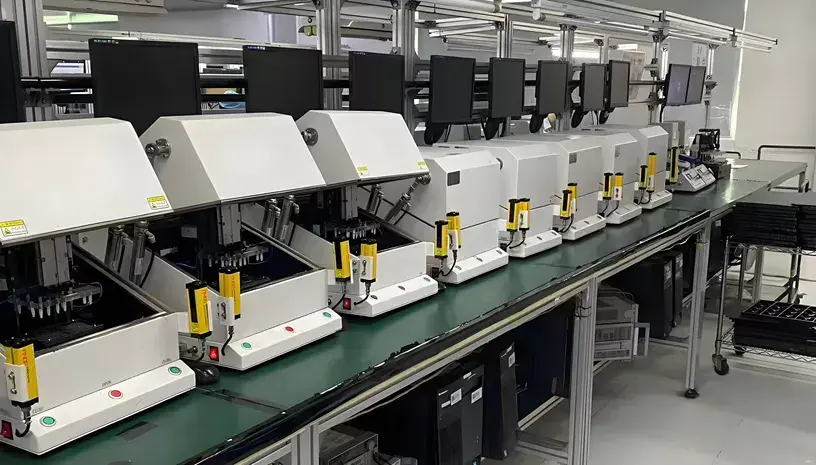
Choosing a high‑quality shield box requires evaluating a combination of performance, reliability, usability, and compatibility. Below are the most important key features you should focus on:
1. High Shielding Effectiveness
Shielding performance is the core function of a shield box.
- Look for stable, high attenuation across your target frequency range.
- Typical high‑performance models reach 60 dB to 100+ dB.
- Ensures external EMI is blocked and internal signals do not leak.
2. Reliable Sealing Structure
Seal quality directly determines shielding consistency.
- Use conductive gaskets, spring fingers, or magnetic seals.
- No gaps around doors, hinges, or interfaces.
- Stable performance even after long‑term repeated use.
3. Suitable Internal Dimensions
The shield box must fit your device without compression or excess space.
- Match the size of the product under test (mobile, module, router, drone, etc.).
- Leave space for fixtures, cables, and thermal management.
- Custom sizes are recommended for special or large devices.
4. Wide Range of Filtered Interfaces
A practical shield box provides clean, filtered I/O connections.Common options:
- USB 2.0 / 3.0
- DC / AC power
- RJ45 Ethernet
- RF (SMA, N-type)
- HDMI, DB9, DB15, DB25
- Audio, antenna portsGood interfaces ensure no interference enters through cables.
5. Good Ventilation & Thermal Management
Electronics generate heat during testing.Key features:
- Filtered ventilation or fans
- Heat dissipation design
- Prevents overheating while maintaining shieldingEssential for long‑duration testing.
6. Stable & Convenient Operation
Choose an operating style that matches your workflow:
- Manual: low cost, for R&D
- Pneumatic: fast, consistent, for production lines
- Motorized / automatic: for fully automated test systems
- Drawer type: high efficiency for mass production
7. Solid Mechanical Construction
Durability ensures long service life.
- Sturdy metal casing
- Wear‑resistant surface treatment
- Stable structure under frequent use
- Suitable for laboratory and industrial environments.
8. Effective Wave Absorber (for RF/OTA testing)
For antenna, Wi‑Fi, Bluetooth, and OTA tests:
- Built‑in RF absorbing foam/material
- Reduces reflection, resonance, and standing waves
- Simulates a clean, open test environment
9. Reliable Grounding
Proper grounding eliminates static and interference.
- Dedicated grounding terminal
- Low‑resistance connection to the earth
- Prevents the shield box from becoming an interference source
10. Customization Flexibility
Standard models may not meet special requirements.Strongly consider suppliers that offer:
- Custom size
- Custom interface configuration
- Combined acoustic + EMI shielding
- Special fixtures or automated integration
Conclusion
When selecting a shield box, prioritize shielding performance, sealing quality, interface compatibility, size, and durability. A well‑designed shield box improves test accuracy, stability, and production efficiency, making it essential for R&D, quality control, and certification testing.
Saisheng Technology: A professional supplier of RF shielding boxes, audio isolation testing equipment (acoustic chamber,soundproof box,anechoic
chambers,sound proofing box), and antenna couplers,test connectors&test modules.
chambers,sound proofing box), and antenna couplers,test connectors&test modules.