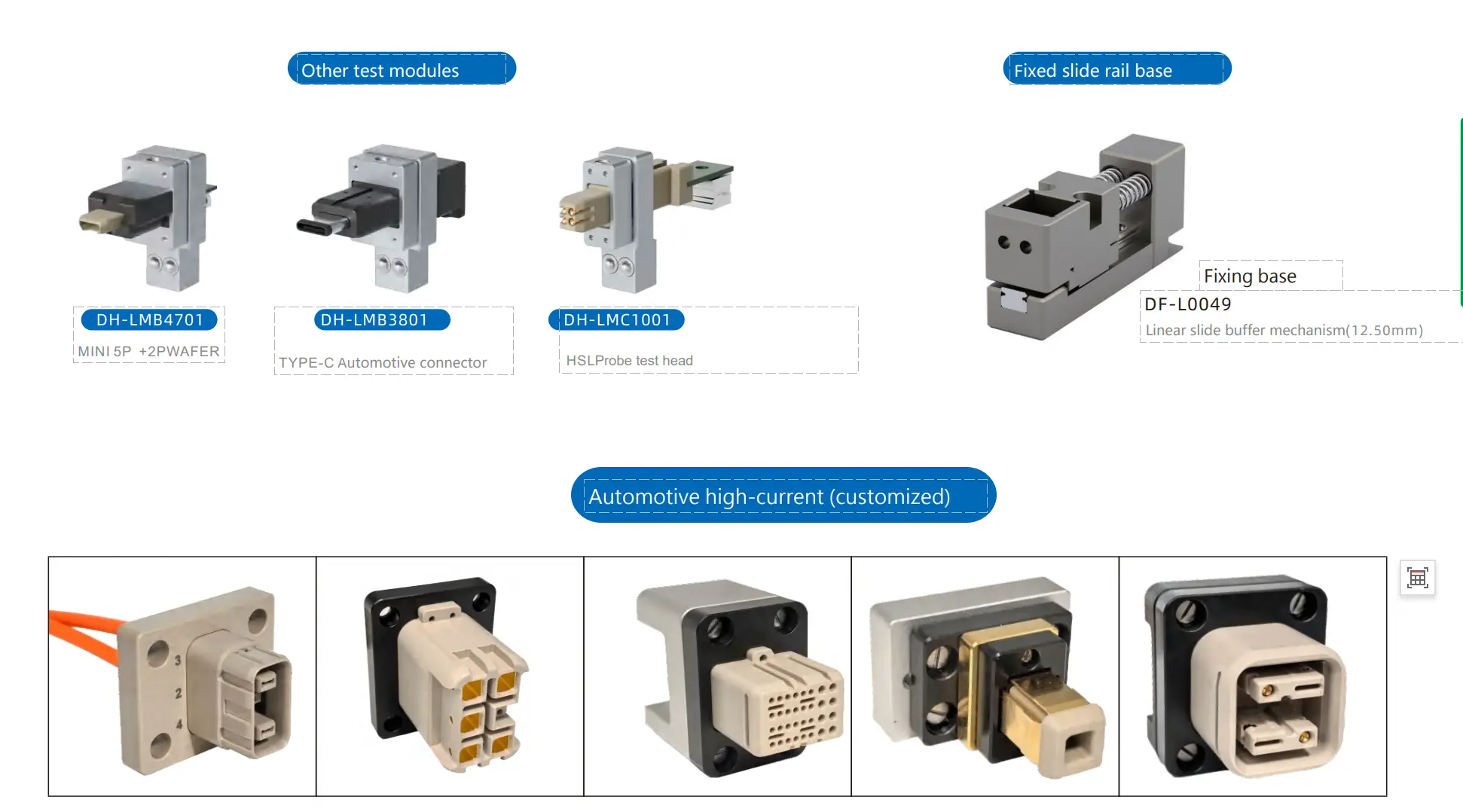
Automotive connector test connectors
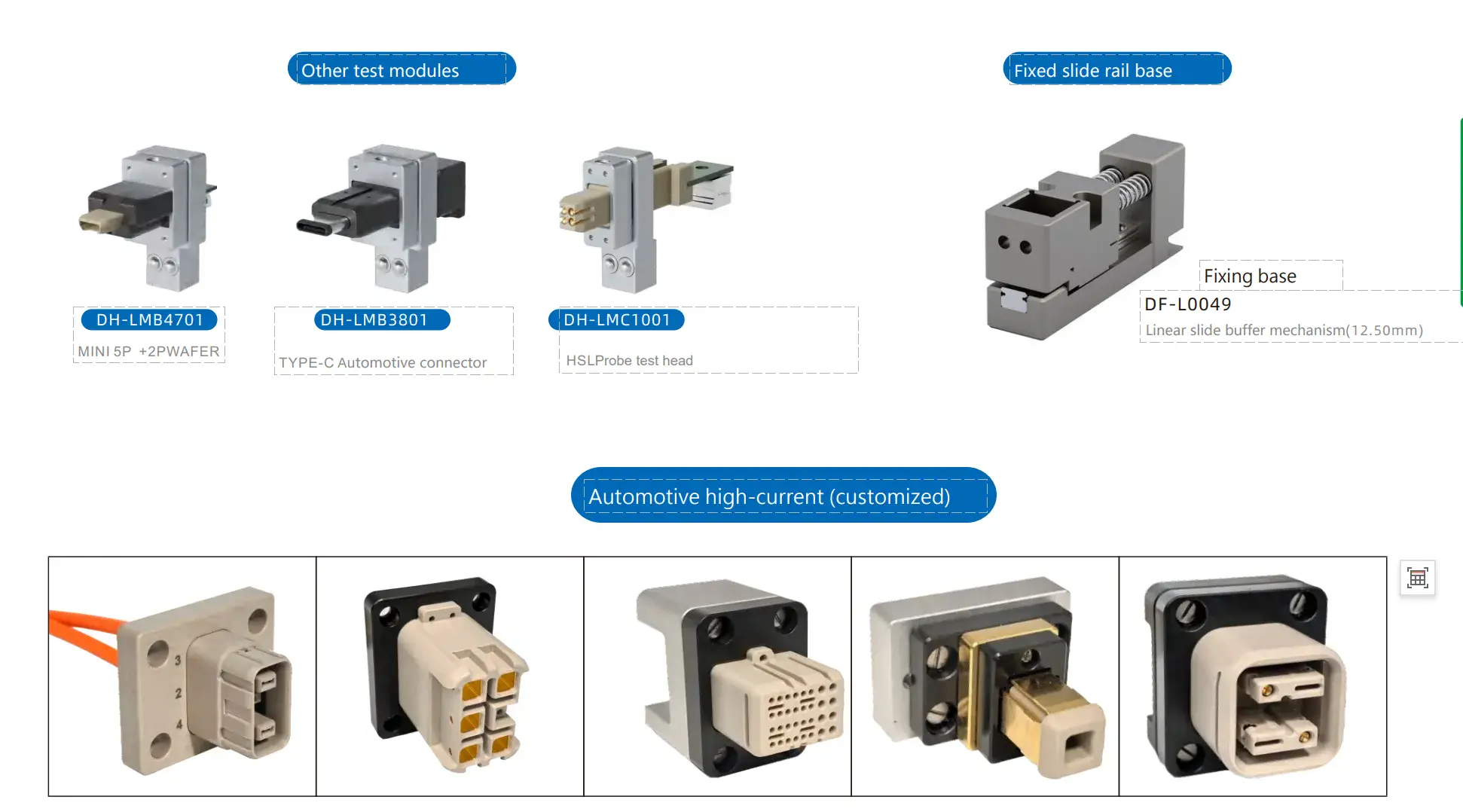
The automotive connector test module is indeed a cornerstone of automated testing processes for automotive connectors, and its significance extends beyond just efficiency and plug-in/pull-out automation. Let’s break down its key functions, technical features, and broader impact in the automotive industry:
1. Core Functions of the Automotive Connector Test Module
.Automated Plug-in/Pull-out Testing:
This is one of its primary roles. It simulates thousands of insertion and extraction cycles (matching real-world usage scenarios) to evaluate: -
Durability: Whether the connector can maintain structural integrity after repeated use. -
Retention Force: Ensuring the connector doesn’t loosen accidentally during vehicle operation.
Contact Stability: Preventing intermittent electrical connections caused by wear or misalignment.
.Electrical Performance Testing: It integrates tools to measure critical parameters:
Resistance: Checking for excessive contact resistance that could cause overheating.
Insulation Resistance: Ensuring no current leakage between pins or to the housing.
Voltage Withstand: Verifying the connector can handle specified voltages without arcing.
.Mechanical and Environmental Testing: Advanced modules may include:
Vibration Testing: Simulating vehicle vibrations to detect loosening or contact failure.
Temperature/Humidity Cycling: Testing performance under extreme climatic conditions (e.g., -40°C to 125°C) to mimic automotive environments
Sealing Integrity: For connectors in wet areas (e.g., engine bays), testing resistance to water, dust, or oil ingress.
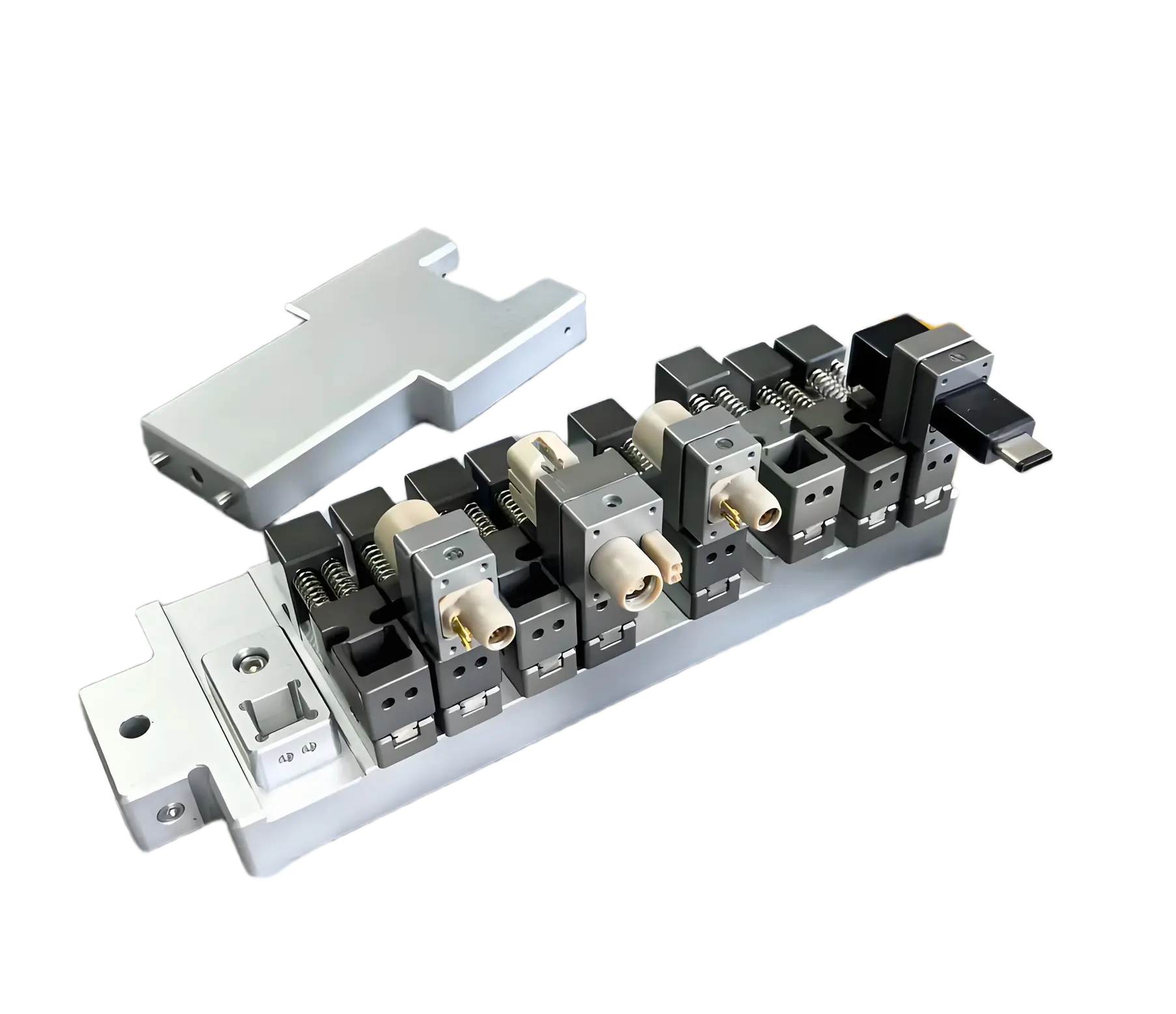
2. Why It’s Critical for Automation
High Throughput: Manual testing is slow and error-prone, especially with the thousands of connectors in modern vehicles (e.g., infotainment, ADAS, powertrain). Automated modules can test 10x–100x more units per hour.
Consistency: Eliminates human variability in insertion force, test timing, or data recording, ensuring compliance with standards (e.g., ISO 16750, USCAR).
Data Integration: Connects to IoT systems or MES (Manufacturing Execution Systems) to log real-time data (e.g., failure rates, cycle counts), enabling predictive maintenance and quality analytics.
Cost Reduction: Lowers labor costs and reduces rework by catching defects early in production.
3. Key Technical Features
Modular Design: Adaptable to different connector types (e.g., circular, rectangular, board-to-board) via interchangeable fixtures, reducing retooling time.
Precision Actuators: Servo motors or pneumatic systems control insertion force (typically 1–50N) with ±0.1N accuracy to avoid damaging delicate pins.
Sensors: Force transducers, cameras (for visual inspection of pin alignment), and electrical probes work in sync to validate performance.
Safety Mechanisms: Emergency stop buttons, overload protection, and enclosed test chambers prevent operator injury or connector damage.
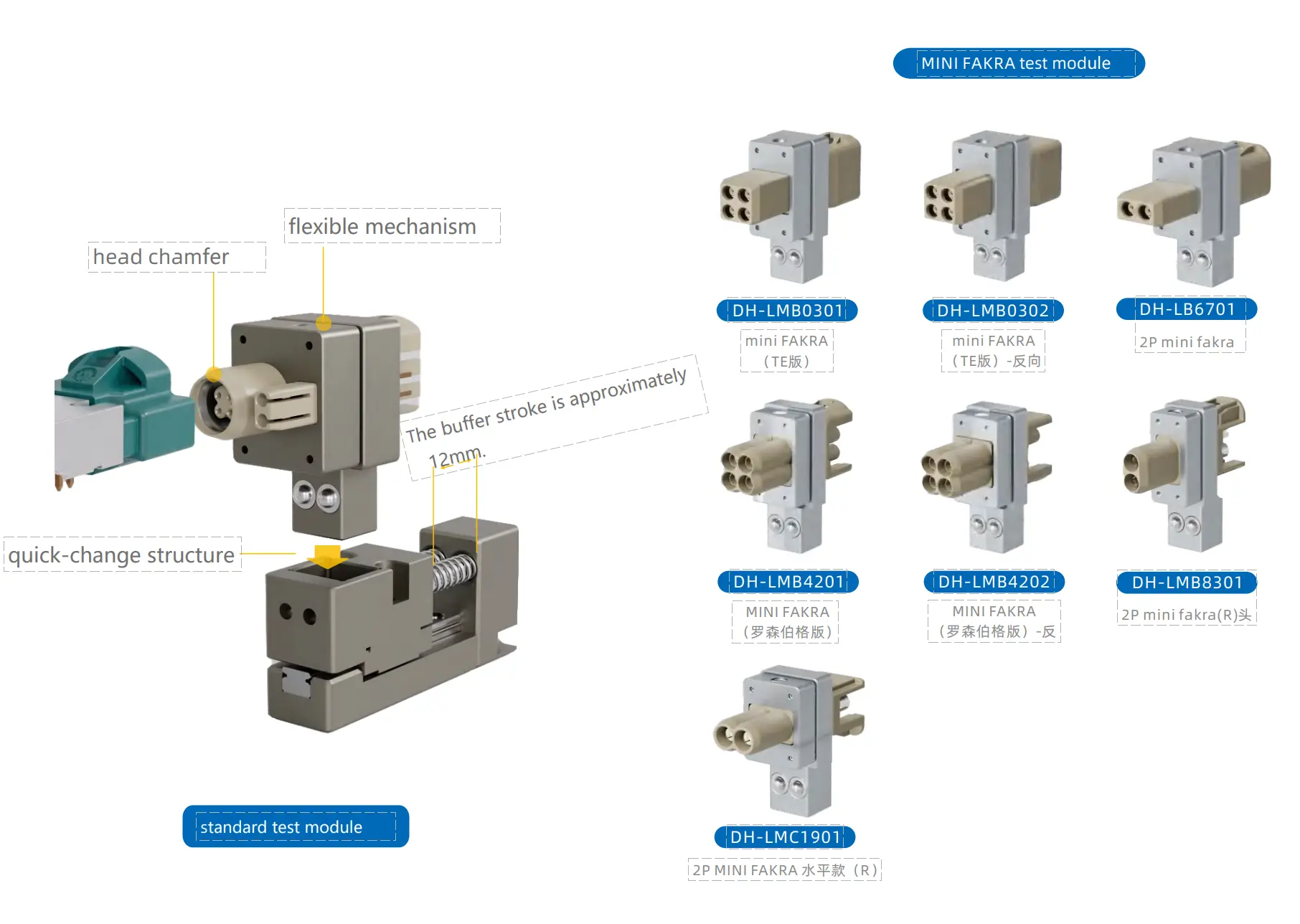
4. Industry Impact
As vehicles become more electrified (EVs) and connected, connectors must handle higher voltages (400V–800V) and data rates (e.g., Ethernet for ADAS). The test module ensures these components meet strict reliability standards, directly impacting:
Vehicle Safety: Faulty connectors can cause critical failures (e.g., battery fires, brake system malfunctions).
Customer Satisfaction: Reduces warranty claims from connector-related issues (e.g., loose wiring causing infotainment glitches).
In summary, the automotive connector test module is not just a tool for automation—it’s a guardian of quality and reliability in modern automotive manufacturing.
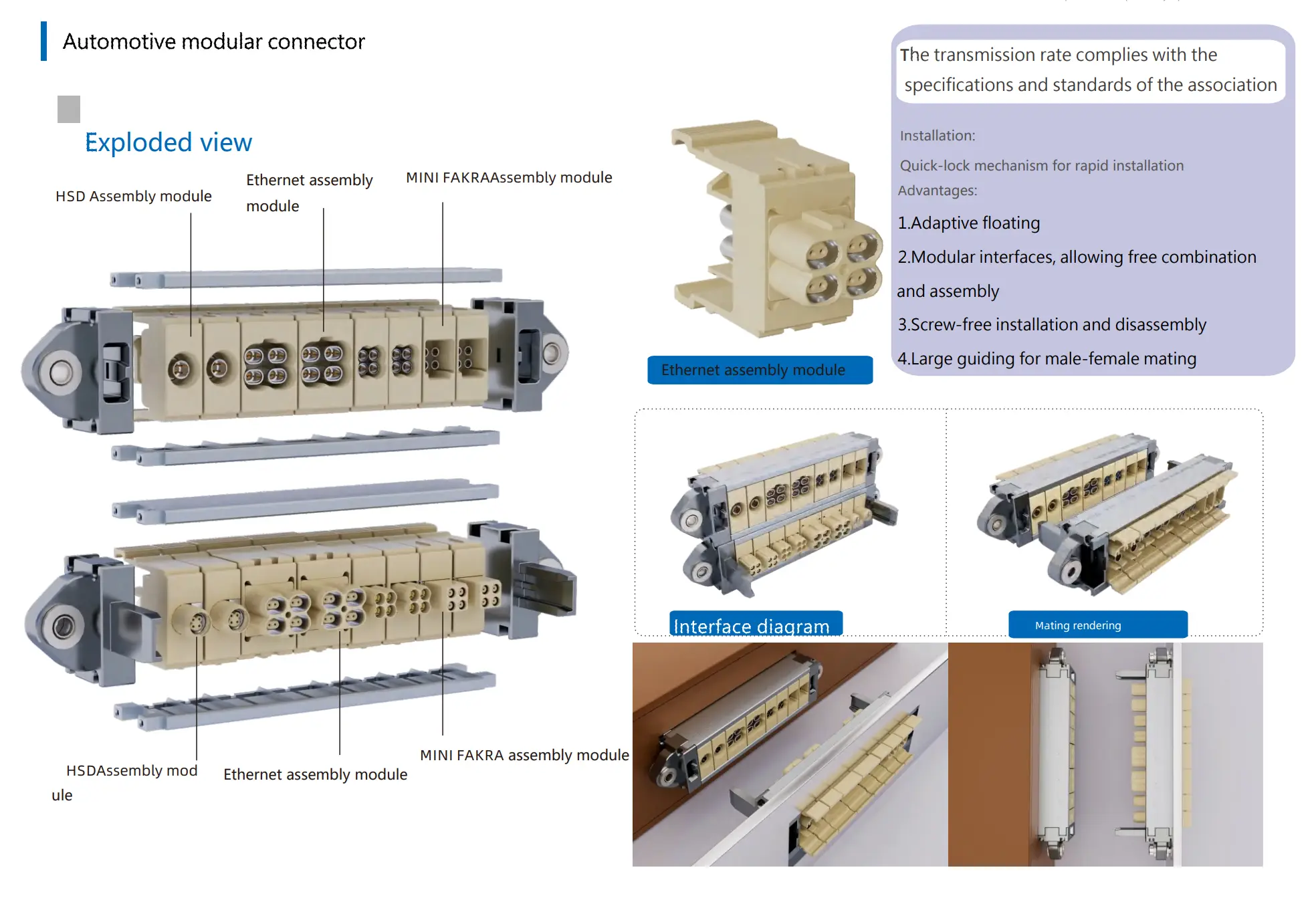
Sai Sheng specializes in RF shielding equipment and audio noise shielding equipment. a professional supplier of RF and audio testing equipment.We has a senior engineering, project manager and marketer with more than 15 years of experience in the electronic test and measurement and electronics manufacturing industries. We provide customers with tailor-made shielding boxes, soundproof boxes, automated testing systems, automatic plug-in modules, coupled antennas, etc.
PreviousRF&Microwave Switch